
Finding Former Owners in the Floyd County Deed Trail
Begin with the current owner of record or a known deed. Start a Floyd County property search from that point. Walk the conveyances backward one grantor at a time. The Clerk's computerized land index reaches back to 1970. Anything earlier waits in bound books, with extensive microfilm cataloged at the Library of Virginia. A deed's calls can be hard to match. When that happens, historic plats and survey volumes can clarify the property description. An index reference is only a pointer. The full recorded instrument is the real evidence.
| Source | Years It Covers | Where Held | What It Shows |
|---|---|---|---|
| Clerk computerized land index | 1970 to date | Floyd Circuit Court Clerk | Grantor/grantee index references for land instruments. |
| Bound deed books | Before the computerized index | Clerk’s office | Earlier recorded conveyances; ask staff for volume and index route. |
| LVA deed books and indexes | 1831–1900 books; indexes through 1980 | Library of Virginia catalog and reels | Historic names, deed references, and cataloged land record series. |
| Surveyors’ and plat books | 1832–1917 surveys; plats from 1972–1980 | Clerk / LVA microfilm | Boundary descriptions, lot references, and subdivision context. |
For a 1970 or later transfer, use the Clerk's modern land index first. For older conveyances, identify the right bound book and party index. The LVA catalog then points you to the reel. The historical index splits into alphabetic ranges across reels. So choose the grantor or grantee side deliberately. Treat a plat or survey as a companion, never a substitute for the deed itself.
Former Floyd County Property Owners in the Deed Chain
The Floyd County deed index lists both sides of every conveyance. Find the latest known deed and note who took title as grantee. Then search that same person as a grantor. That search reveals the next earlier owner, and the walk repeats. Every step must match the same legal description. Complications appear fast. A partial sale, an estate distribution, or a transfer into trust can alter names or parcel shape. So the address alone is a weak anchor.
- Find the newest deed and note its grantee, grantor, recording reference, and legal description.
- Search the prior grantor as a grantee to locate that party’s acquisition.
- Repeat the comparison, checking for partial transfers, estate instruments, and changes in description.
- At the 1970 index edge, ask for the relevant bound book and continue with the archival party indexes.
- Grantor and grantee
- The party conveying and the party receiving the stated interest.
- Chain of title
- The sequence of recorded transfers connected to the same land.
- Legal description
- The instrument’s land description, which usually remains more useful than a modern street address in old records.
How Far Back Floyd County Former Owners Are Recorded
Floyd County deed records begin with Book A, covering 1831 to 1836. The grantor and grantee index spans 1831 through 1980 on reels 42 to 48. A separate Deeds 1 index covers 1831 to 1892 on reel 5. These are archival reels. They are not a promise that every page is searchable online by street name. Some copies are flagged for interlibrary loan. The Clerk's 1970 cutoff changes how you access the records. It does not change where the ownership history begins.
Lawful use. Use former-owner research for property history and title diligence. Do not use the names or addresses in a Floyd County record to track, threaten, or harass a living person.
Find Former Owners in the Correct Floyd County Index Reel
The Library of Virginia's general index is split into letter ranges. Grantee and grantor sections are kept separate. On the grantee side, the catalog lists ranges A–B, C, D–E, F–G, H–J, K–M, N–R, S, and T–Z. Grantor ranges include A–B, C, D–G, a D–G continuation, H–J, K–M, a K–M continuation, N–R, S, and T–Z. A range may continue onto another reel. So record the exact reel number and index side as you go. This microfilm finding aid is the map. A keyword box cannot search these names for you. The LVA Floyd County collection page lists deed books, index reels, and other land record series.
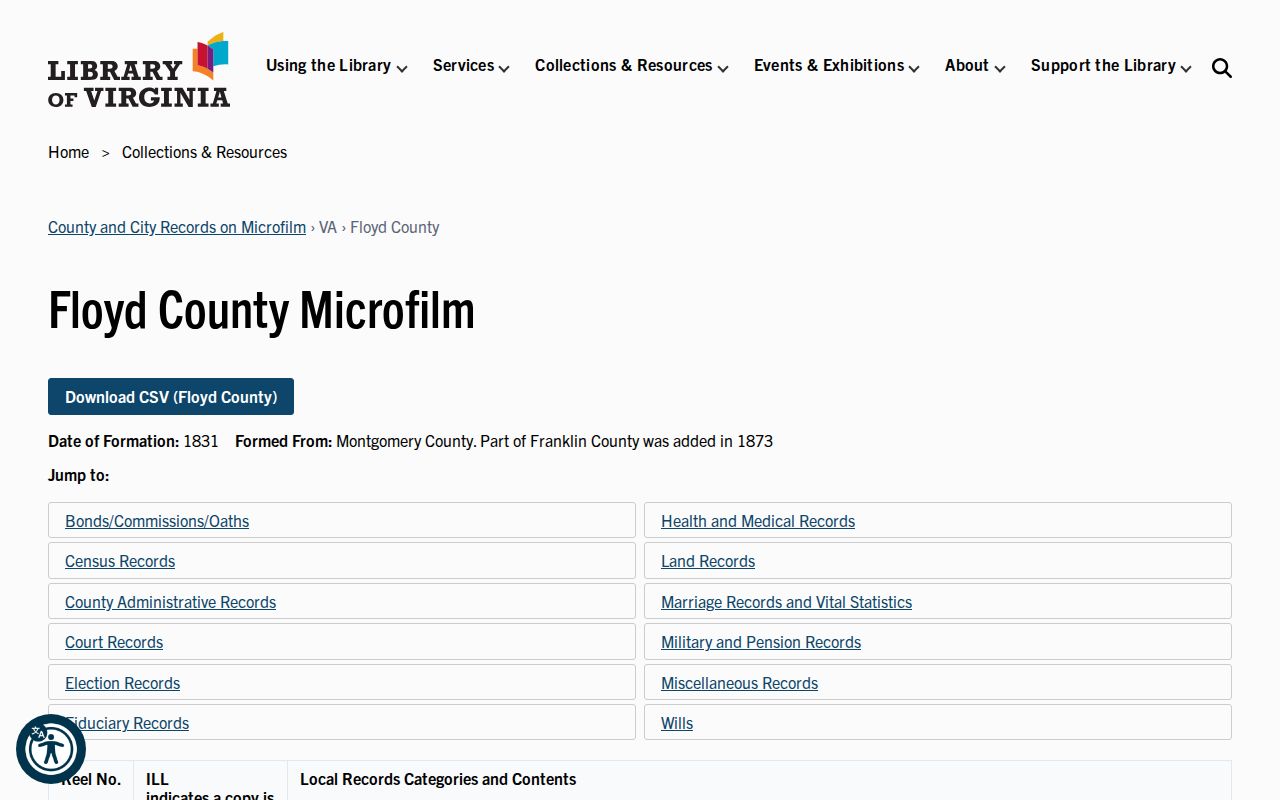
Reels marked ILL can be borrowed. Ask a participating library how the borrowing works and how the reel or its images are viewed.
Historic Sources for Former Floyd County Owners
The Library of Virginia catalog lists Trust, Deed and Mortgage Books 1 through 3 for 1904–1920. Indexes accompany these volumes. These volumes can reveal security interests tied to a parcel before the computerized era. Judgment-lien indexes cover 1917–1980 for both defendants and plaintiffs. The catalog also holds a Judgment Lien Docket and Execution Book 12 covering 1962–1976. A careful historical review often needs both index sides. It also needs the underlying docket, not just the deed chain. Ask the Clerk or library how a catalog title maps to the physical reel. Plat Books 2 through 6 span 1972–1980. The Surveyors' Book reaches from 1832 to 1917. Their dates overlap the modern land-index period. They can explain a parcel split or a changed lot description.
Partition and Chancery Sources for Prior Floyd County Owners
Not every ownership change came from a simple purchase. Heirs and disputed divisions leave a different paper trail. The catalog lists a 136-page "List of Deeds for the Partition and Conveyance of Land, 1913–1937." That volume sits on reel 15. The general index to ended chancery causes covers plaintiffs and defendants from 1831 through 1980. Virginia Memory has scanned Floyd causes from 1828 to 1916. Those files can explain a partition, a title fight, or a family transfer. Tie them back to the later deed that actually describes your parcel. Virginia Memory's Floyd County chancery listing provides the online index. It also supplies scans for the covered cases.
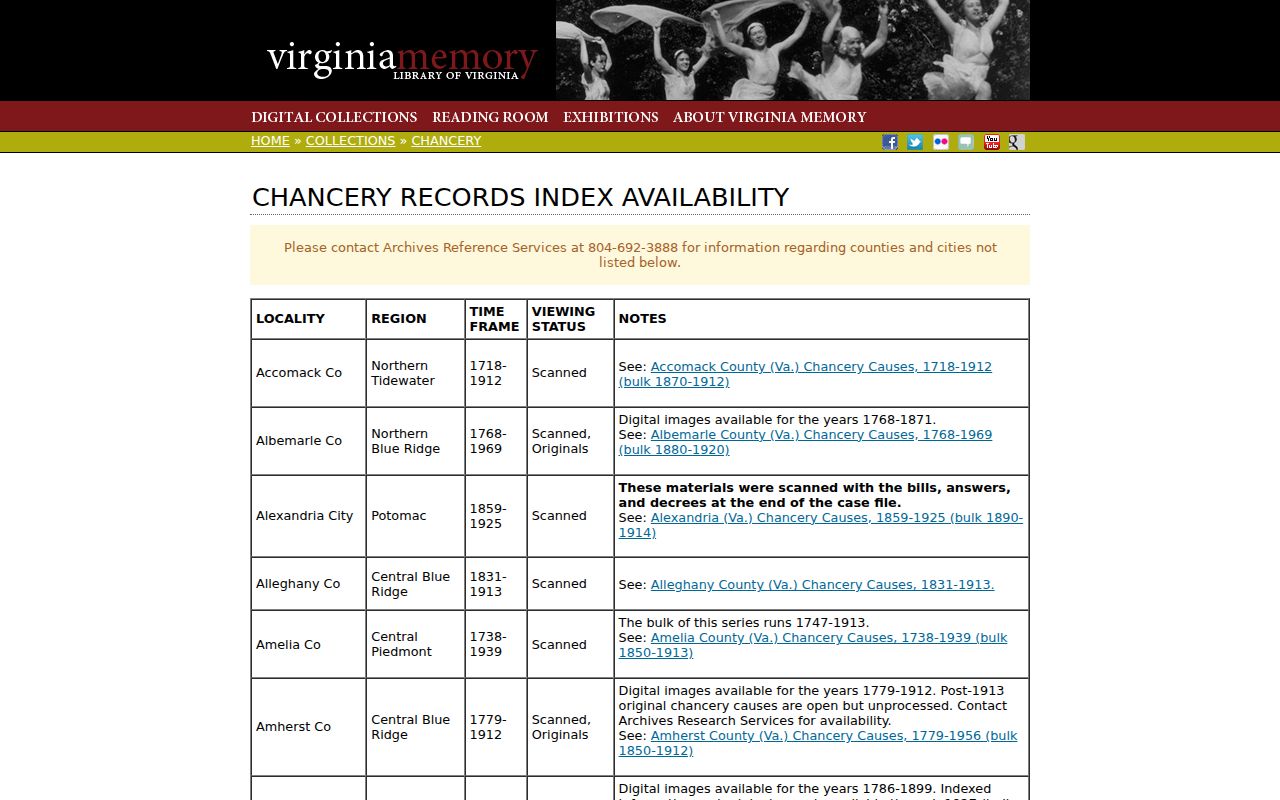
Use both plaintiff and defendant name paths when the catalog offers them. Note the cause reference before requesting the original file.
Do Not Treat Floyd County’s Missing Book Letter as a Loss
The LVA catalog lists Floyd County deed books A through H, then J and K. No letter I appears at all. That missing letter is not evidence of a lost volume. Many old record systems simply skipped it. Capital I and J were easy to confuse in handwritten entries. When you cite a reference, keep the exact designation the catalog shows. Ask the Clerk how that book is cited in the local deed records. The early Deeds 1 index and the later alphabetic index are separate finding aids. Tracing a nineteenth-century chain of title may require working through both of them in turn.
Early books describe land differently than modern records do. A deed may name a road, a tract, or an adjoining owner instead of a street address. Copy the boundary calls exactly, along with acreage and the neighbors named. Then set them beside later instruments and plats for comparison.
Mark the Limits of a Floyd County Ownership Timeline
Any ownership timeline depends on getting the parcel match right. The legal description may shift between deeds. That means the tract was split or combined, and a single branch of the chain might cover only part of the current property. An estate instrument can divide interests among several heirs. A trust or business entity can hold title under a different name. That name never appears in the family line. A grantor/grantee index is a pointer, not a legal answer. It leads you to documents but settles none of these questions. Keep a citation for every source you use. When a purchase or claim depends on the result, have a title professional review the full sequence of Floyd County property records.
For house history, record what each document actually says. A deed's execution date and its recording date are two different things. Never assign an owner from a same-name index hit alone. Common surnames run through every generation of the tax roll and deed books.
Virginia Vital Records Can Support an Estate Research Trail
A former owner's property sometimes passed through heirs. Vital records can help place that person in a family timeline. They cannot establish title to Floyd County land, though. Virginia opens births after 100 years and deaths, marriages, and divorces after 25. Certified copies of closed records generally go to immediate family with identification. Public genealogy indexes and older archival copies follow their own access rules. Use the vital record as context. Then go back to the probate file and the recorded deed to see how the property interest actually moved. That deed connects an heir to the parcel number. The birth or death record does not. Virginia's genealogy guidance explains the public index periods and archival access in detail.
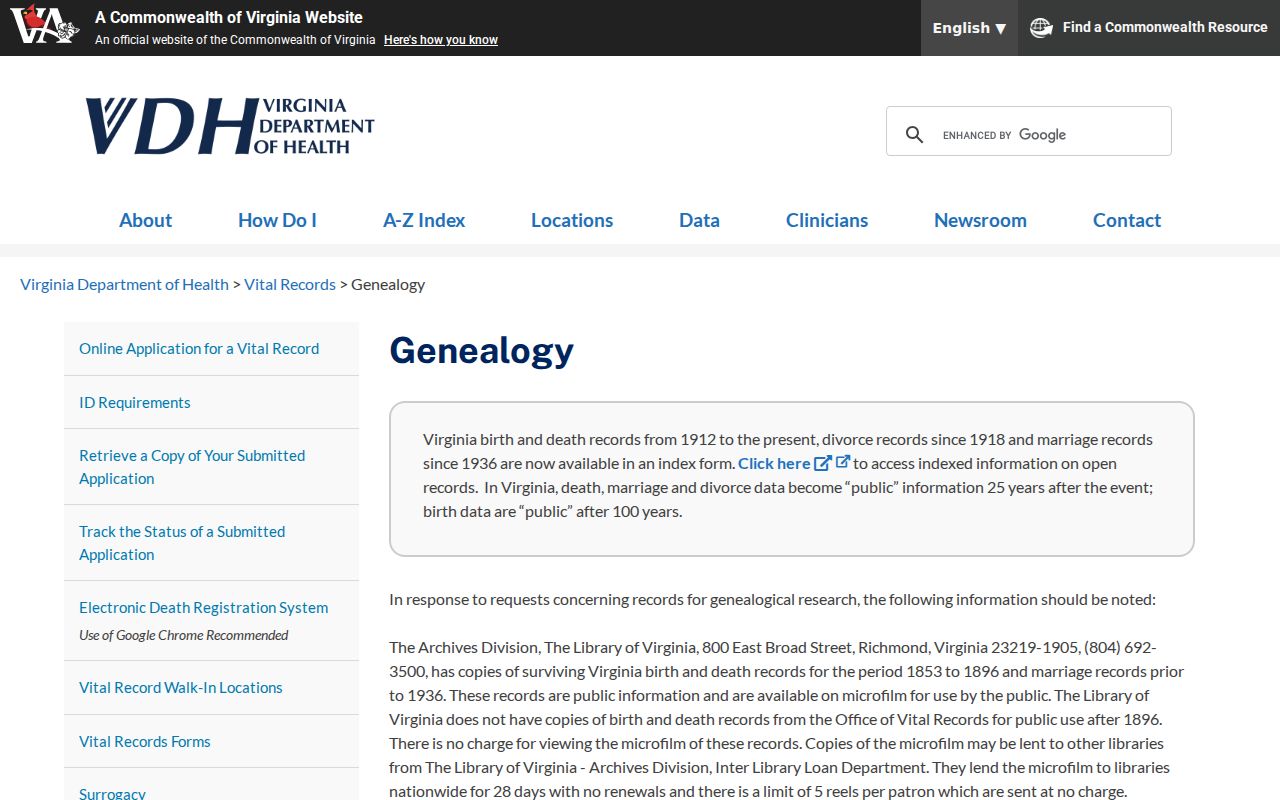
Check the record year and category before requesting any copy. Virginia's vital-record application index lists the forms for birth, death, marriage, and divorce records.
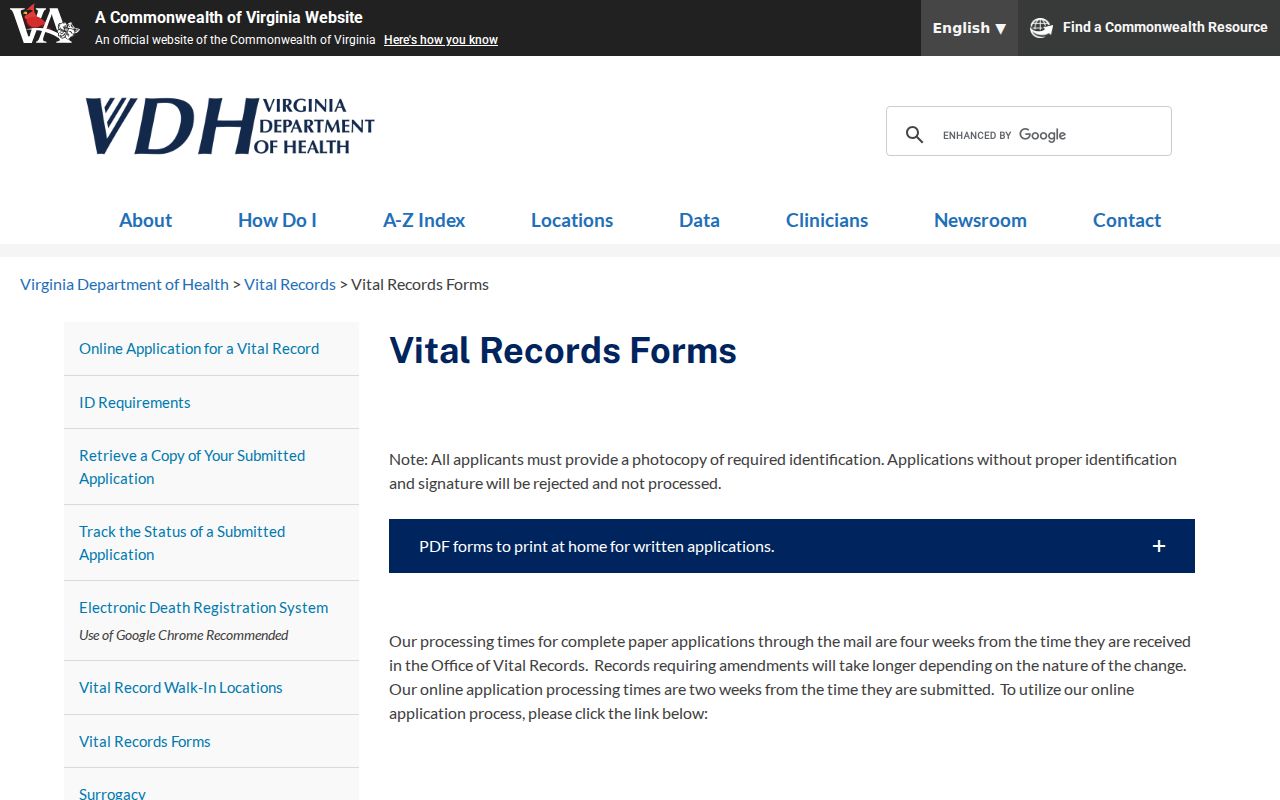
Use the form instructions for eligibility, identification, signature, and current processing information.