
Floyd County Deed Records and the Instruments Around Them
The Circuit Court Clerk at the courthouse keeps Floyd County deed records. A deed proves a transfer happened. It carries the legal description, or a reference back to an earlier one, and names the parties on both sides. It does not promise clear title. Alongside deeds, the land records hold deeds of trust, mortgages, releases, liens, judgments, plats, financing statements, wills, and fiduciary filings. Each type tells a different story. The labels inside the Clerk's subscriber system may not match everyday terms, so ask for records using the office's own terminology. Don't assume a modern label finds it.
| Deed Type | What It Does | Common Use |
|---|---|---|
| Deed | Records an instrument transferring an interest in land. | Trace grantor, grantee, date, and legal description. |
| Deed of trust or mortgage | Records a security interest associated with a loan. | Review encumbrances and later releases. |
| Certificate of satisfaction | Records release of an original deed of trust. | Check whether a recorded loan instrument was later released. |
| Plat or map | Records a mapped division or land depiction. | Read lot and boundary references with the deed. |
| Judgment or lien | Records a claim or court-related entry in its index. | Search the relevant index and confirm the underlying document. |
A deed and a deed of trust are not the same thing. The deed conveys the land. The deed of trust secures a debt. A certificate of satisfaction releases it later. A recorded plat can clarify a lot reference, but the Clerk's index and the mapped image still deserve a careful read against the complete legal description.
Floyd County Deed Records in the Grantor-Grantee Index
Floyd County's computerized land-record indices reach back to 1970, according to the Clerk. The index runs on names. An address alone will not carry you far. Begin with the current assessment owner or a known deed reference, find that party in the index, then use the recorded instrument to name the earlier grantor. One step takes you back a generation. Judgments, financing statements, wills, and similar material carry their own computerized start of January 1, 1994. That later date applies to those indexes only, not to when the underlying records begin.
- Use the latest assessment name or deed reference to identify a likely grantee entry.
- Open the instrument and record its grantor, grantee, date, and legal-description text.
- Search the grantor as a prior grantee to locate the earlier transfer.
- Follow book, page, or instrument references and repeat without skipping estate or trust transfers.
- For pre-1970 land indexes, ask the Clerk about bound books and consult the Library of Virginia catalog.
- Grantor
- The party conveying an interest in the instrument.
- Grantee
- The party receiving the interest described in the instrument.
- Chain of title
- The sequence of recorded transfers used to trace interests over time.
- Book and page
- A volume reference used in older records; retain any newer instrument reference printed on a copy.
Getting Copies from Floyd County Deed Records
A Floyd County deed can be obtained in a few different forms, so start by deciding what you actually need. You may simply want to inspect the record, get a plain copy, order a certified copy, or pull a remote electronic image. The Clerk's courthouse sits at 100 East Main Street, Room 200, Floyd, Virginia 24091, and the phone number is 540-745-9330. Hours run Monday through Friday, 8:00 a.m. to 4:30 p.m., and recording stops fifteen minutes before closing. The local page mentions secure remote access through a quarterly subscription. It does not state the subscriber price. Call ahead before counting on remote access or assuming a mailed copy fee.
Recorded, not guaranteed. The Floyd County deed index shows recorded instruments, not every possible claim or unrecorded interest. A title examination is separate from locating an image in the Clerk’s system.
Floyd County Deed Records Begin Their Computer Era in 1970
The online index is not the county's real beginning. Computerized land-record indices run from 1970 to date. Earlier deeds wait in bound books. Judgments, financing statements, and wills carry a separate computerized start in 1994. Neither date is an image cutoff. If a deed search stops at the modern index edge, ask staff which bound volume or handwritten index covers the year and party name you need. Requests move faster with details. Include the property's Tax Map/Parcel ID, the grantor or grantee, and a year range.
For deeper history, The Library of Virginia's Floyd County catalog lists the historic deed books and index reels.
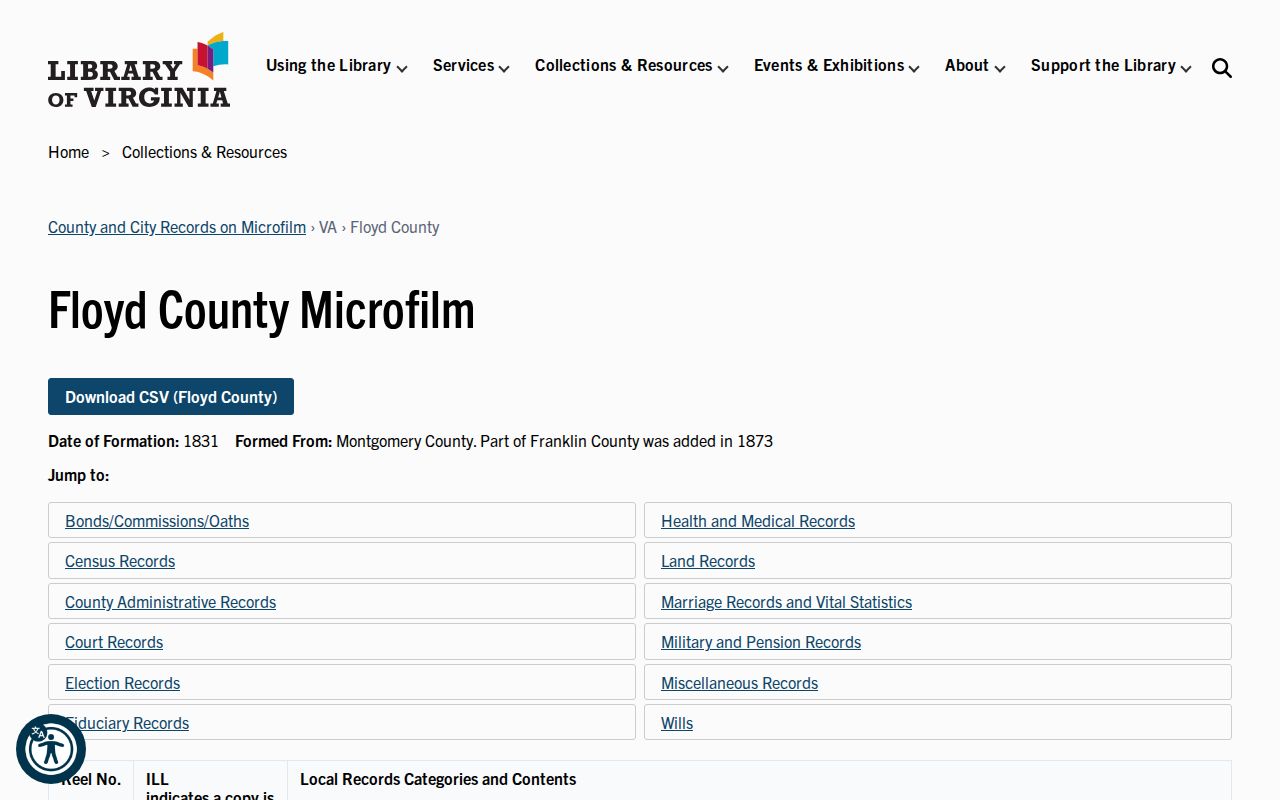
The catalog guides you; it does not keyword-search deeds.
Trace Older Floyd County Deeds Through Index Reels
Floyd County deed books begin with Book A, covering 1831–1836, in the Library of Virginia catalog. The big prize is the alphabetic grantor-grantee index. It spans 1831–1980 on reels 42–48. Letters are split across reels, so first pick the grantor or grantee side, then use the catalog's letter range. A Deeds 1 index covers 1831–1892 on reel 5. Remember: it's a finding aid, not a search box. Some reels qualify for interlibrary loan. That could let you work through a participating library instead of driving to Richmond or Floyd. Check current ordering rules with the library first.
One quirk: the catalog's sequence skips Book I between H and J. That likely reflects historical book naming rather than lost records, and the Clerk can confirm it, so keep book labels exactly as the source gives them.
Floyd County Deed Records Use Plats and Survey Books with Deeds
Deeds often lean on older maps. A metes-and-bounds description or a named lot can be hard to picture from text alone. The Floyd County catalog helps here. It lists an indexed Surveyors’ Book covering 1832 through 1917. It also lists indexed plat volumes from 1972 to 1980. Together those volumes bridge the gap around 1970, when the computerized land index began. Start with the instrument reference. Then work out which plat or survey entry matches its legal description.
A recorded drawing can clarify lot lines, roads, easements, and adjoining tracts. It still cannot stand in for a present-day survey. That matters when a boundary on the ground is in dispute. For newer subdivisions, the parcel identifier ties the assessment card to the plat. It also ties the card to the deed. One caution applies. A subdivision’s name may differ from the identifier the Commissioner uses. So search each source by its own key.
Floyd County Deed Records and Chancery Files Preserve Land Disputes
Estates, unclear heirs, and boundary fights can break a deed chain. Chancery files often fill the gap. Virginia Memory has scanned Floyd County chancery causes from 1828 through 1916. The original case files stay with the local Clerk. The Library catalog also lists a general index to ended chancery causes covering 1831 to 1980. It includes entries for both plaintiff and defendant. Search by party names first. Write down the case reference before asking for an original file.
A chancery case can explain a partition or a title dispute. Yet it never replaces the deed recorded afterward. Virginia Memory’s chancery index identifies the scanned Floyd County collection. Treat the file as historical evidence. Then follow any resulting conveyance back into the Clerk’s land records.
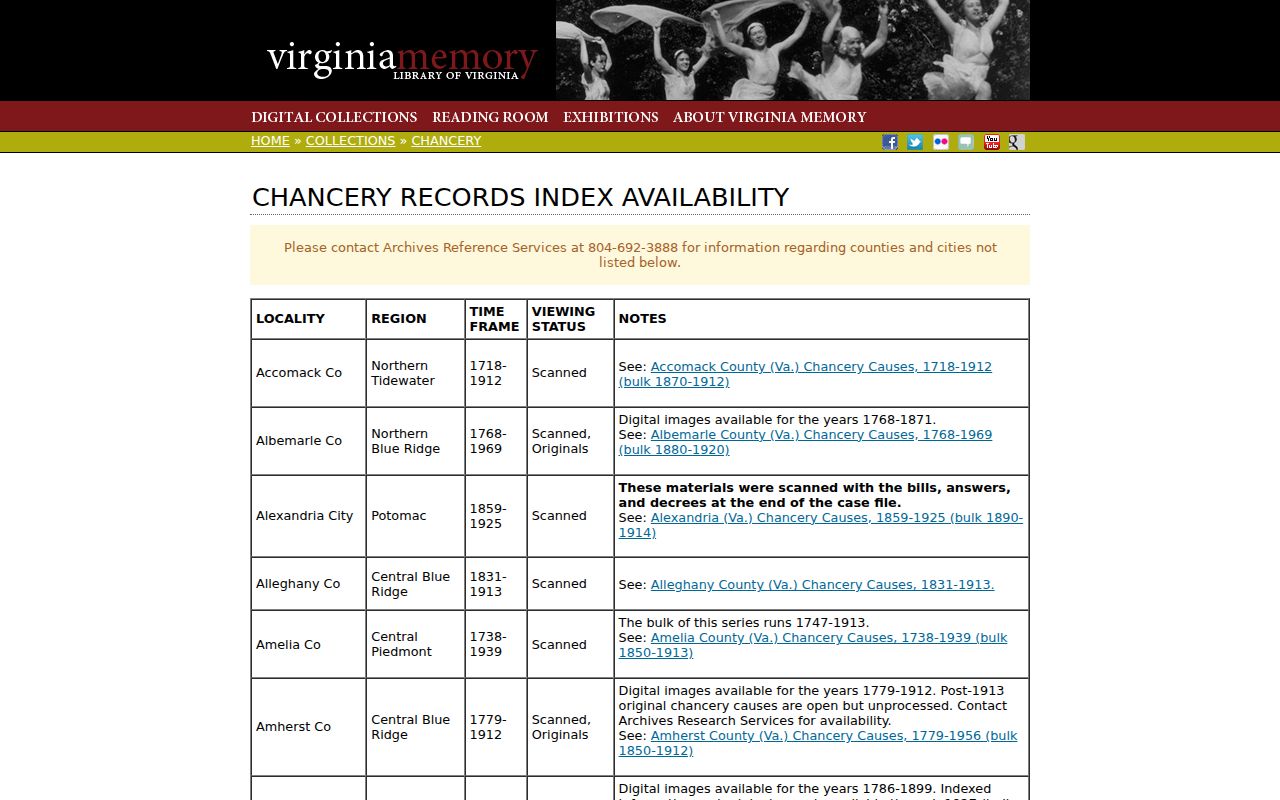
Treat the file as evidence. Follow any resulting conveyance back into the Clerk’s land records from there.
Floyd County Deed Records: Copies and Recording Fees
Copying a deed and recording one are separate services. For a copy, gather the book and page or instrument number. Include the parties and whether certification is needed. For a new filing, Virginia Code §17.1-275 sets fees by document length. The schedule lists $18 for ten pages or fewer. It lists $32 for 11 to 30 pages, and $52 for 31 or more. Larger plat or map sheets carry a separate per-sheet fee. Schedules change. Special instruments have their own rules. Confirm the current amount with the Clerk before filing. The statute also steers part of every fee toward preservation of permanent circuit-court records through the Library of Virginia.
Remote access follows a different path. Virginia’s remote-access statute permits subscription charges under a separate section. Floyd’s public page describes a quarterly-fee arrangement of its own, without naming a price. So do not infer a county rate from the statutory ceiling. Ask the Clerk which access service is offered now. Ask also whether it includes indexes, images, or both.
The Virginia Court Hub Does Not Replace Floyd County Deed Records
The Virginia Judicial System runs a case-information hub for participating courts. It links case searches with secure land-record access. It is not a deed index. No statewide circuit-court search replaces the Floyd County Clerk’s index for local land instruments. The Floyd County Circuit Court Clerk remains the custodian of deeds and land records. State case tools only cover the court records they actually hold. Searching the wrong portal can make a recorded deed look missing when it is not. Carry the owner name, parcel identifier, and instrument reference to the local Clerk route instead. The official Virginia Courts information hub is the state-level starting point. It serves case and secure land-record services. Confirm any access requirements with the Clerk first. Do not treat it as a substitute for the local deed index.
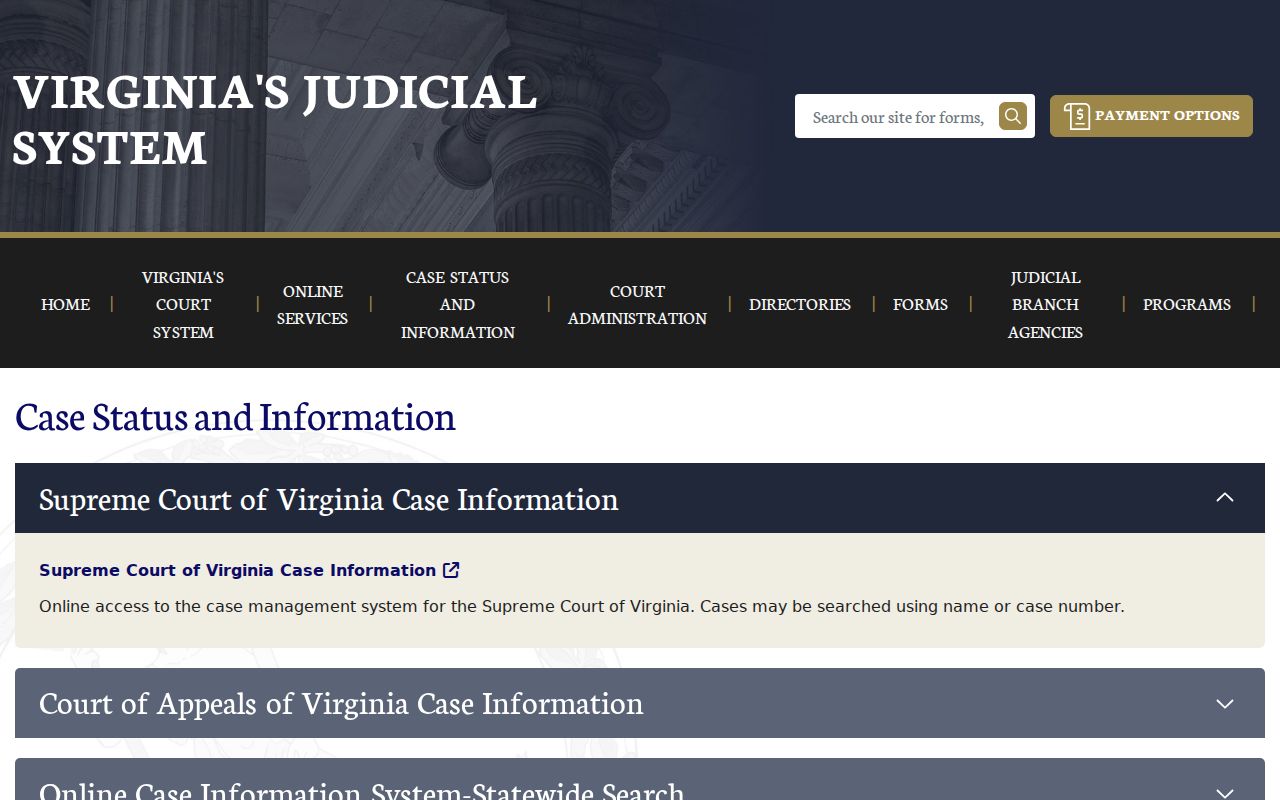
Check access requirements with the Clerk first. A state portal can be a helpful starting point, but it does not replace the official Floyd County deed records kept in the local deed index.
Search Virginia UCC Filings Separately from Floyd Deed Records
The Virginia State Corporation Commission runs its own business-entity, UCC, and federal tax-lien search routes. The Virginia SCC UCC page describes online filings and document images. These date from October 1, 2003. They are searchable by debtor name or file number. Keep this system separate from the Floyd County Circuit Court land index. A UCC filing is not automatically a real-estate lien on a given parcel. So verify the record type, the debtor's identity, and the governing instrument before tying it to land. For any lien or judgment that affects title, also check the relevant Clerk index. Check the actual recorded document as well.
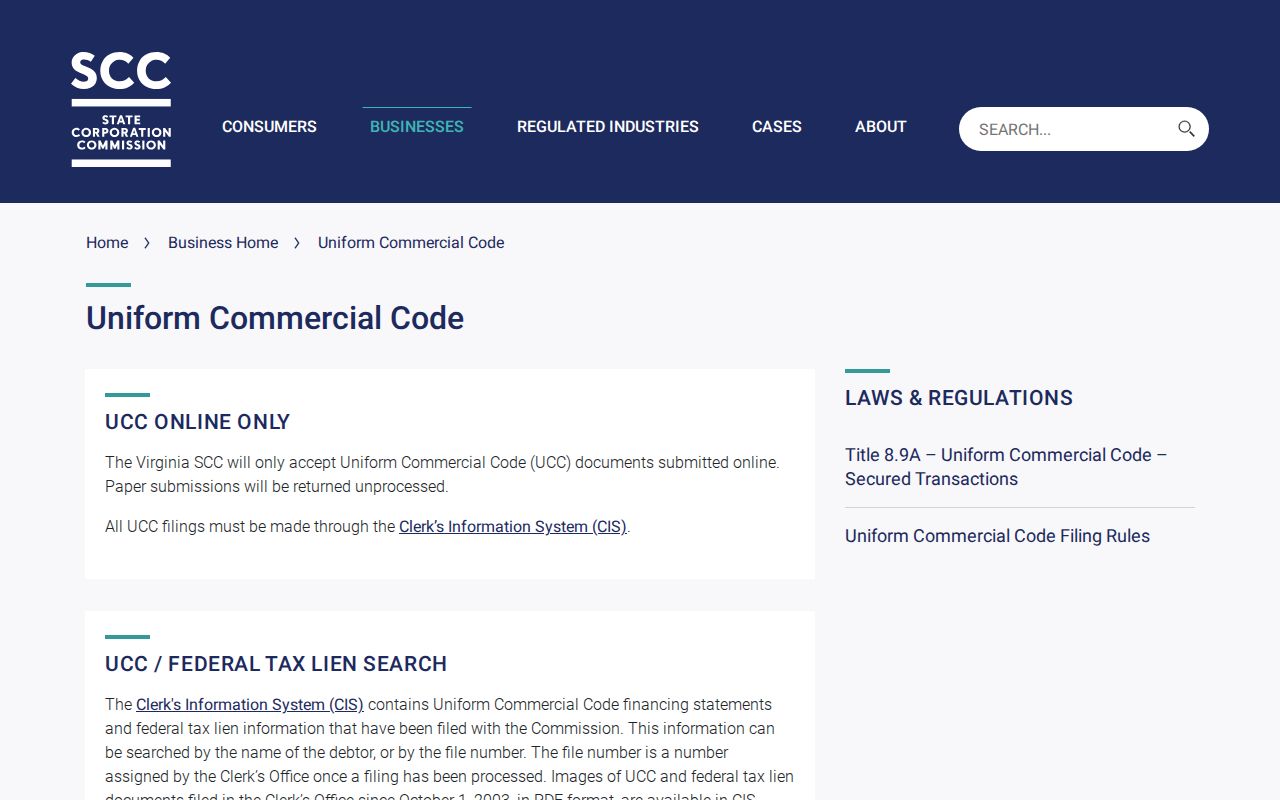
Keep the two systems straight. Business filing records are not land instruments, so confirm whether a UCC filing concerns the same party and the same property before drawing any conclusions about a Floyd County parcel.